
Chatterings List:
New Look 6356 Sell Top
In short, the armpit test involves me tucking a swatch into the armpit of my bra for a few days. This test tells me a lot about next to skin softness, and how the yarn might wear over time.

Can you tell any difference between this picture, and the one I took the other day? (Apart from the fact that the sun is out here today.) I can’t. I keep checking the swatch for signs of piling or abrasion, and there just aren’t any. It looks exactly as it did after that first wash, except… it’s softer. Significantly softer. Putting Samite next the the sweatiest part of your body for three days makes it soften. Seriously though, I think Samite is one of those precious yarns that is going to get more beautiful with age. And I can wear it next to my skin and forget that it’s there.
At £26.50, Samite definitely falls into the luxury category. Personally I think it’s worth every penny, and will gladly confess that I have fallen head over heels for this yarn. It makes me want to knit with beads, something I never thought I’d find myself saying.
Wool is a renewable resource, so typically I don’t worry about missing out. There will always be more beautiful yarn – right? But I am saving my pennies for a jumpers quantity of this yarn. If it sells out in the meantime – well, you will find me under by desk quietly weeping.

One of the reasons I’d held on to my sample of Blacker Yarns Samite for so long, is because I couldn’t decide if I should try a lace or cable pattern. In the end lace won, probably because I’ve been thinking about lightweight summer garments recently.
Samite might not be what you would imagine when you think of a silk/wool blend for knitting lace. It’s much more of a woolly yarn, without the silky shine. You can definitely feel the qualities of the Shetland element of this yarn, in that it is light and has a little halo. However, when I compared the swatch with my pure shetland shawls, the difference was obvious. The longer wool fibres and silk give Samite a slightly more dense feel, and much less halo. I loved the way it showcased the Horseshoe pattern; but if you’re trying to create that etherial tissue paper like shawl, with great stitch definition, this is probably not the yarn to use.
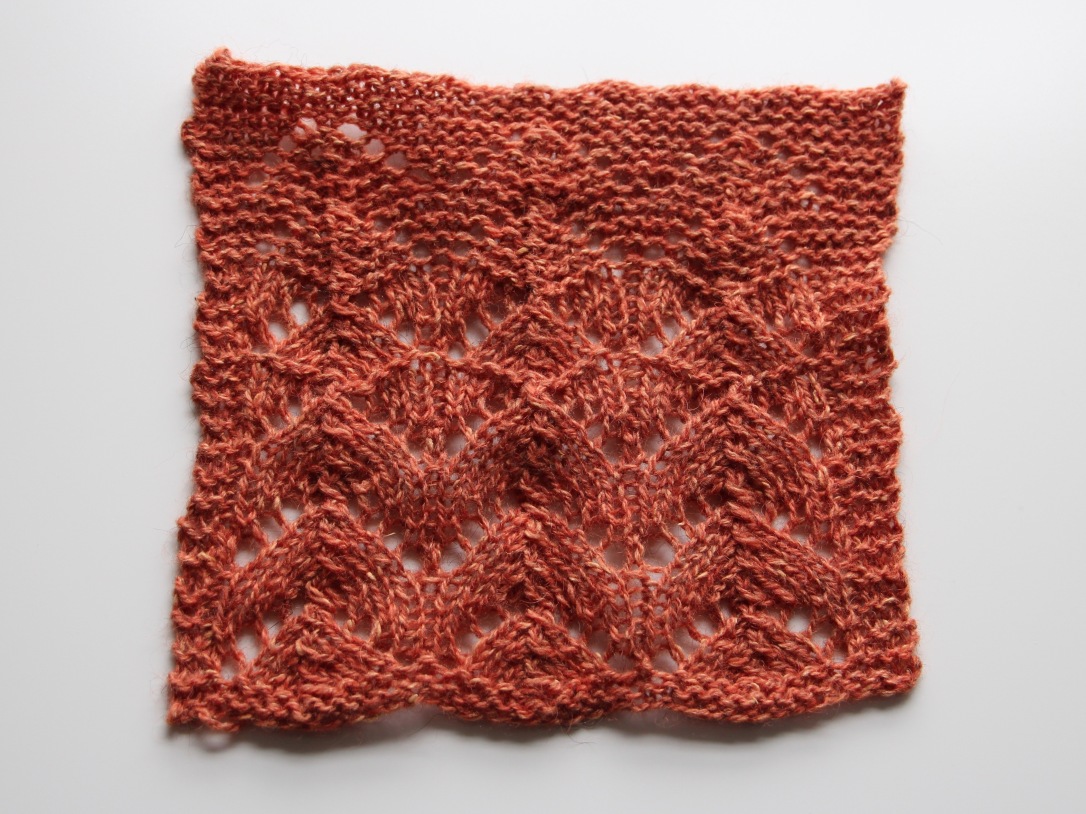
My swatch was knitted on 3.25 mm needles, and was 14 cm square before washing. I hand washed the swatch just in water, and stretched out the lace so it was 15 cm square when it dried. Knitting a lacey swatch, then stretching it is probably not the best test of yarn bloom, but I can tell you that the yarn didn’t change visibly on washing.
I’m really intrigued to find out how this yarn wears, so pop back on Friday for the Armpit Test.
Back in March, at the Edinburgh Yarn Festival, I was given the sweetest little sample skein of Samite, from Blacker Yarns, in the Eternal Day colour-way. It was wound into a ball almost immediately. I have been wistfully squishing it ever since, and wondering what stitch pattern to try out.
Last week I finally put needles to yarn, and will be telling you about the results over the next few day. To start off though, all the vital stats are below.
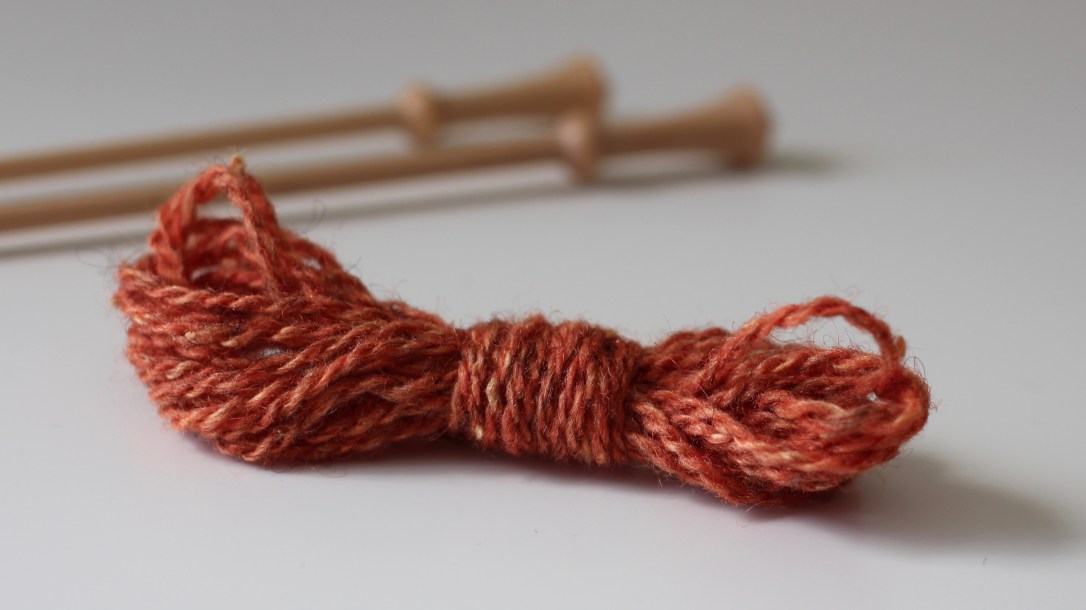
Yarn weight 4 ply/Fingering; Skein weight 100 g; Fibre content 30% Blue-faced Leicester, 40% Shetland, 20% Ahimsa Silk, 10% Gotland; Length 460 m; Tension 28 stitches over 10 cm; Recommended needle 2.75 mm; No. of plys 2; Made in Cornwall, UK.
Chattering List:
I am wearing Charlotte’s Web
Ankle Socks
SAS Spring Challenge Socks
Cosy Knitter tutorial for weaving in ends as you go
Stash Appreciation Society
This episode is all about my new Simple Socks collection! Please join us in the Louleigh Ravelry group if you are knitting one of my patterns.
This week I’ve been wondering around with a square of knitting folded over the armpit of my bra. This is not something I plan to mention at dinner parties.
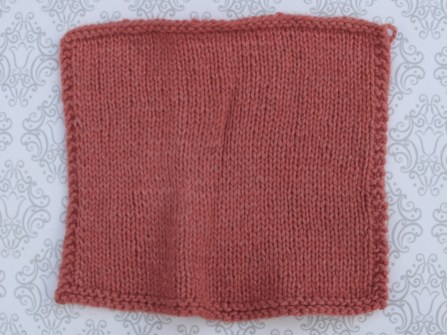
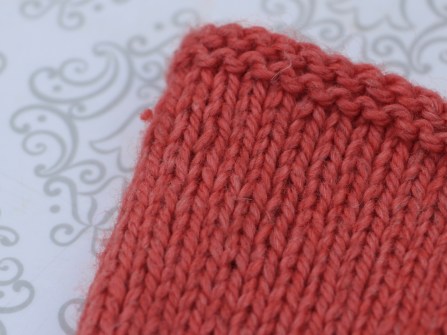
The Armpit Test is the most reliable measure I have to assess the Luma yarn, sent to me by The Fibre Company, for prickliness and wear. Lets get the prickle factor out of the way first. I completely forgot about this swatch. For me this yarn had no prickle factor at all. If you are sensitive this is a yarn to consider.
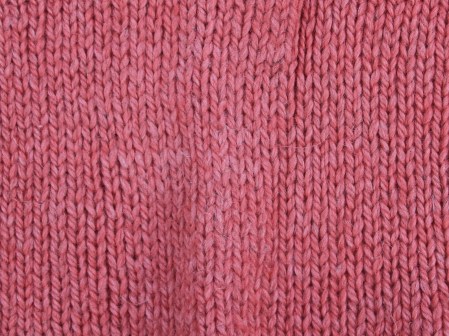
The swatch only really started to show signs of wear after it had been worn for three days. The stitches started to get that flat look, common on cotton knitwear in high friction areas. And it was only in a very small area that saw a lot of movement. In a garment with positive ease, I think this yarn would wear well. If you were planning to use it for something more figure hugging, you will see signs of wear after a few days. I have put the swatch back in the wash to see if the yarn is returned to it’s former glory, and will show that in my round up on the next podcast.
There was one pill. Frankly, I think that’s reasonable.
If you are looking for yarns with good ethical credentials, The Fibre Company wear their heart on their sleeve. I’ve seen some websites for yarn companies where they use all the right language, but don’t follow through with facts. I really enjoyed the stories on The Fibre Company Blog, where I could make my own value judgement about their ethics. Luma retails on the pricey side at £9.60 for 50g. I would be spending £70 to £100 for a garment. I thought it was a good quality yarn. It held it’s shape, seemed to wear well, was a pleasure to knit with, and came in a nice range of colours. This is an investment yarn for enjoyable knitting, and a beautifully functional garment.
If you saw my post on Monday, you may have been wondering how that beautiful Luma yarn from The Fibre Company knitted up.
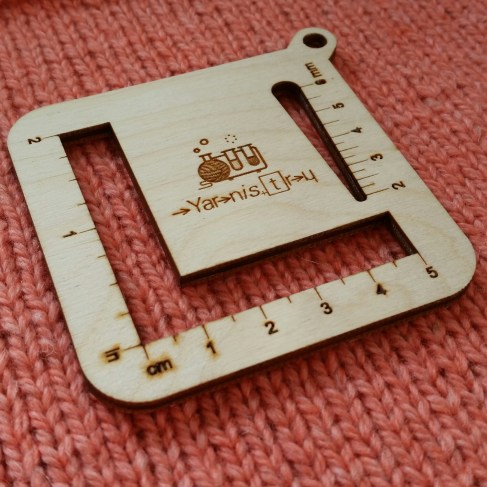
Luma is a blend of wood, cotton, linen, and silk. Cotton, linen, and silk are notorious for having no elasticity at all; however the 50% wool content means that there is enough elasticity for a pleasant knitting experience. The finished swatch isn’t as springy as some I’ve knitted, but the fabric does pop back into shape after you tug at it. Luma is a 2 ply yarn, and they have given the fibre just enough twist so that it isn’t splitty, but doesn’t feel like rope either.
I knitted my swatch on 3.75 mm needles, and ended up with a gauge of 22.5 stitches and 31 rows over 10 cm. Then the swatch had a bath in cool water, and a popular wool wash; and laid flat to dry. It came out with a gauge of 21 stitches and 33 rows over 10 cm. The fabric feels rather nice. It’s not has heavy as some yarns with cotton, it has a nice drape, and the silk content gives the yarn a slight lustre. It’s made a lovely smooth fabric, with a very low prickle factor.
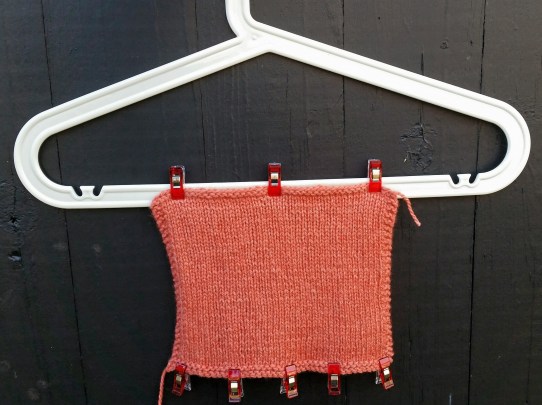
The hanging test was the bit that really interested me. Have you owned, or worse still knitted, a cotton jersey that lost all its shape on its first outing? I hung the Luma swatch for 24 hours with a little bit of weight attached to the bottom, and am pleased to report no change to the gauge at all. The strength of the linen and silk really held everything in shape.
The swatch is currently undergoing the Armpit Test. Pop back on Friday to hear the results.
 louleigh